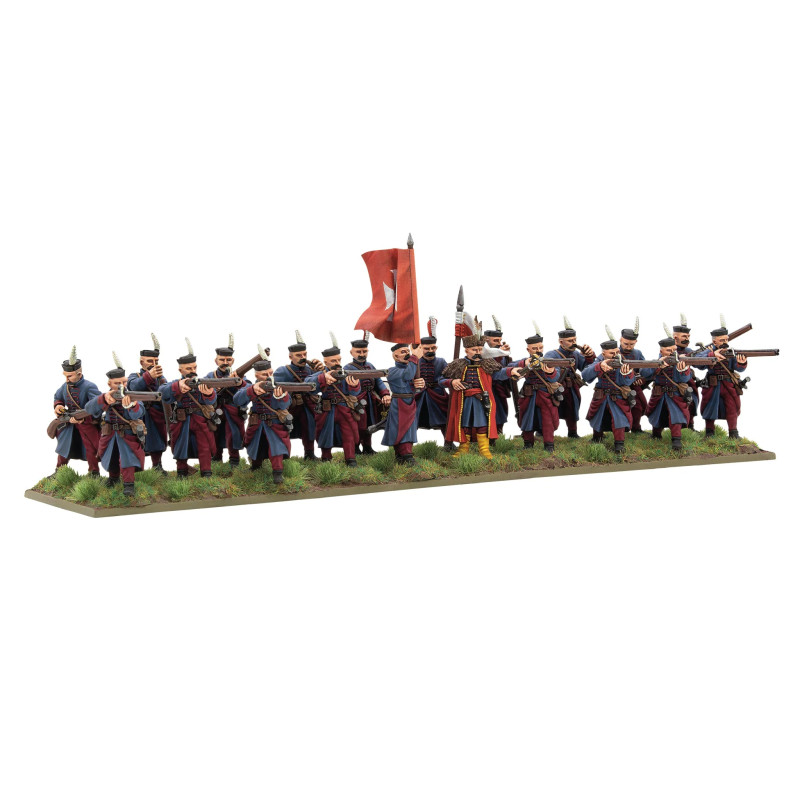
The Polish army had a strong Hungarian influence, due to the close ties between the two nations. In addition to the iconic Winged Hussars, some of the Polish infantry also had their origins in Hungary and the Balkans. These infantry were known as hajduks, sharing the same name as irregular fighters in Hungary. Unlike the Hungarians however, the Polish hajduks formed the core of the Polish infantry.
The role of the hajduks in the Polish army was to support the cavalry by providing fire as the mounted troops prepared to charge. They were versatile soldiers armed with arquebuses and short swords for close quarters fighting should the enemy succeed in closing on them. This combination made them especially effective infantry in the late 1500s and early 1600s. However, the development of muskets made the arquebus-armed hajduks obsolete, and by the late 1600s, they had been replaced by Western-style musket troops.
Contains:
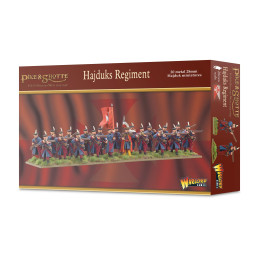
20 metal Hadjuk infantry (includes a command group of officer, standard bearer, and musician)